Can a blocked vent stack cause slow drains even when there is no clog?
Yes. If a sink gurgles, a toilet burbles when another fixture drains, or water moves slowly with no clog anywhere, a blocked vent stack is a likely cause. The vent is the pipe that runs up through the roof. It lets air in behind the water so drains flow freely. When it is blocked, the drain pulls against a vacuum, and the water crawls out of the fixture.
Common causes are leaves, a nest or debris at the roof opening. Inside the wall, a vent can also collapse or fill with scale.
A vent problem often shows up on several fixtures at once. They drain, just slowly, and they gurgle. A clog usually stops one fixture. If every drain in the house is backing up, that is a main line job, not a vent.
Safe homeowner check: listen for gurgling, look at the roof opening from the ground, and run each fixture one at a time to see which ones act up. Do not climb onto the roof yourself.
Stop running water and call now if sewer odor is strong indoors, or a toilet or floor drain is bubbling up.
A cable machine run down from the roof opening clears most vent blockages. If it keeps coming back, a camera inspection shows whether the pipe is damaged. Cost depends on roof access and how far the blockage sits.
Expert Plumbers Co is a referral service. Call (380) 262-9173 and we will connect you with a plumber serving Loving, NM for Drain Cleaning.
Several things can make a vent problem worse or confuse the diagnosis. In cold climates, frost can close the roof opening as moisture freezes around the rim, so symptoms appear in winter and ease in spring. A common mistake is treating the gurgle with repeated plunging or drain chemicals, which does not touch the real cause and can leave caustic liquid in the trap. Another sign it is getting worse is a toilet that fills slowly after flushing or a trap that loses its water seal, because that lets sewer gas into the room. Older homes often have vents routed through cramped walls with long horizontal runs where debris collects, while newer homes may use air admittance valves under sinks that can wear out and stick. When you call, mention which fixtures gurgle and in what order, since that tells the plumber which branch to follow first.
Can a drain under a concrete slab be cleared without breaking the floor?
Usually, yes. Clearing a blockage and repairing a broken pipe are two different jobs, and only the second one needs the floor opened.
In a slab-on-grade house the drain lines run inside or beneath the concrete. There is no crawlspace to inspect, so symptoms are the only evidence you have. A cable or a hydro jetter still reaches the line through a cleanout or through a pulled toilet. Grease build-up on the pipe wall, roots in a joint and scale in cast iron can all be cleared that way.
What does need the floor opened is a cracked, collapsed or bellied section under the slab. A bellied line holds water and collects waste however often it is cleared. In older housing stock where clay or cast iron was the standard, failed sections are more likely.
A camera inspection with a locator pinpoints the fault. The plumber finds the exact spot and marks it on the floor before anything is cut, which keeps the opening small. What the job involves is driven by access, the materials, how much concrete must be opened and removed, and any permit or code requirement. Opening a slab often brings one in.
Safe homeowner check: note whether one fixture is slow or every drain is affected. A single slow fixture is usually a cable job on a branch line. Every drain backing up points to the main line or the sewer lateral.
Stop running water and call now if the whole house is backing up. Report water staining or a warm, damp patch on the floor, because it can mean a leak under the slab.
Expert Plumbers Co is a referral service. We refer homeowners in Loving, NM to an independent local plumber. Call (380) 262-9173.
A spot repair under a slab is more disruption than most people picture. The plumber breaks out a section of concrete, digs down to the pipe, replaces the damaged length, and the floor is patched. Dust, noise and a few days without some fixtures are normal. Furniture and flooring over the area must be moved first, and tile or a finished floor may not match after patching.
For longer runs of damage, some plumbers can line the pipe from inside, or route a new line overhead or outside the house, which avoids cutting the slab. Whether either suits your pipe depends on its condition and on local code.
Ask to see the camera footage and the locator mark on the floor before any cutting begins. Mention in-floor heating, radiant tubing or a post-tension slab if you have one. Cutting into those without knowing is dangerous, so the plumber needs to hear about them before a saw comes out.
Can a drain cable or hydro jetting damage old pipes like cast iron, clay or thin-wall pipe?
Yes, it can, and a good plumber knows that before the machine is switched on. Old pipe is not equally fragile everywhere, and the choice of tool depends on what the pipe is made of and what shape it is in.
Cable machines spin a cutting head against the pipe wall. In sound pipe that is fine. In clay with offset joints, the head can catch on a lip and snag. In cast iron with heavy scale, a cutting head can knock loose flakes, and in a pipe already thinned by corrosion it can punch through. Thin-wall plastic or older Orangeburg-type fiber pipe can be gouged or deformed.
Hydro jetting pushes water at high pressure through a nozzle. On solid pipe it cleans the walls better than a cable. On a cracked clay pipe, a corroded cast iron stack, or a joint that has already shifted, that pressure can widen the damage or send water out into the soil.
So how does the plumber decide? Usually from several clues:
The age and material of the house and the pipe, which tells the plumber what to expect.
Past history, such as repeated roots, earlier repairs, or a line that has never been inspected.
How the cable behaves. A head that bounces, stops at the same distance, or comes back with pipe chips or rust flakes suggests the pipe itself is damaged.
A camera look first. This is the most direct answer. If the line is fragile or offset, the plumber can choose a gentler head, lower pressure, or no jetting at all.
If you suspect old pipe, say so on the phone. Tell the plumber the age of the house and the pipe material if you know it. Ask whether the tool will be matched to the pipe, and whether a camera look comes first.
Sometimes the honest answer is that a quick clearing is worth the risk to get water moving, with a plan to inspect afterward. Sometimes it is not. Either way, the decision should be explained to you before the work starts, not after.
If you need a drain cleared in Loving, NM, Expert Plumbers Co can connect you with an independent local plumber at (380) 262-9173.
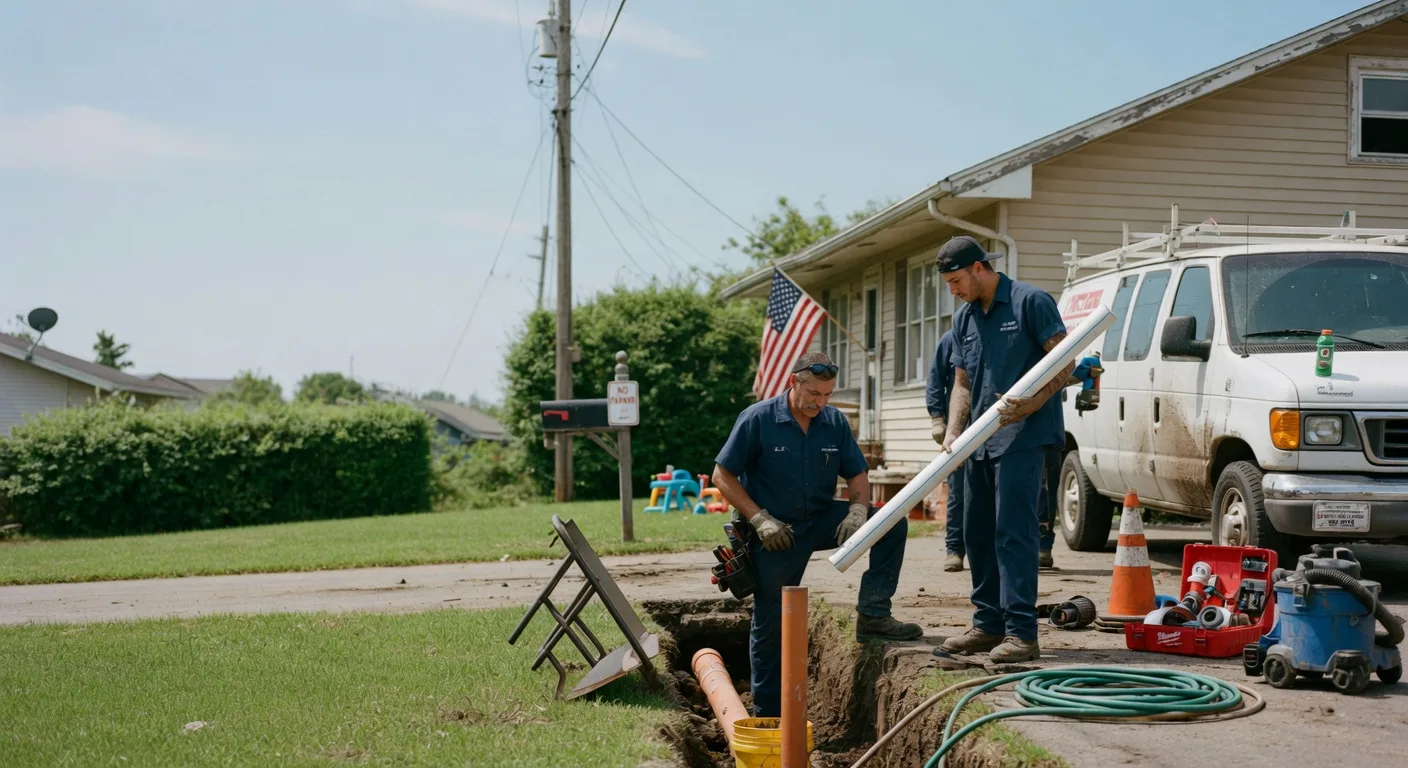
We live in a manufactured home. Why do the drains under the floor keep clogging?
You live in a manufactured home, and the drains keep clogging. A sink runs slow, the tub gurgles, or the toilet backs up every few months. The cause is usually under the floor, where you cannot see it.
Drain lines in a manufactured home run through the belly wrap, between the floor framing and the ground. The runs are long and shallow, with very little fall, so water and solids move slowly and grease, soap and paper settle. Over time the hangers that hold the pipe can fail and the line sags. A sagging section becomes a bellied line that holds water and collects debris. Lightweight plastic pipe can also crack or pull apart at joints when the ground shifts.
Cold weather adds a problem. Pipes under the floor can freeze, and a frozen drain looks like a clog until it thaws. Roots can also reach the outside section where the home ties into the sewer.
One slow fixture is usually a branch or trap problem near that fixture. If sinks, tub, toilet and washer all slow down together, or water comes up in the lowest fixture, the main run under the home or the sewer connection is the likely spot.
Safe homeowner check: Run each fixture one at a time and note which are slow. Look for a cleanout outside near the home and see whether it holds water, without opening it under pressure. Do not crawl under the home if it is wet or smells of sewage.
Stop running water and call now if sewage is coming up inside, if water drips from the belly wrap, if the floor feels soft, or if the smell of sewage is strong under or around the home.
A cable machine is often enough for a soft clog in one branch. Hydro jetting is the better tool for build-up on the wall of a long, shallow run. A camera inspection is the right step when clogs keep returning, because it can show a sag, a cracked joint or a separated pipe.
Expert Plumbers Co is a referral service. We connect you with an independent local plumber in Loving, NM. Call (380) 262-9173.
Ask the plumber how they will reach the pipe and whether the belly wrap has to be opened and resealed. The scope depends on access under the home, how much belly board or insulation comes off, the pipe material, whether hangers need replacing to restore the slope, and any permit or code requirement.
Our walk-in shower has a long linear drain and it keeps backing up. Why?
Your walk-in shower has that long, slim linear drain along one wall or the back edge, and it keeps backing up. The water rises around your feet, drains slowly, then does it again a week later. There are a few reasons a linear drain behaves this way.
The channel is long and shallow, so it collects hair and soap scum along its whole length. Many linear drains also have a small outlet at one end or in the middle, often undersized compared to the flow from a large shower head. If the pan is built with a low slope toward the drain, water crawls instead of running, which leaves scum behind and lets hair settle. Under the cover, the trap or the first section of pipe can also fill with hair, so the channel looks clean and still backs up.
If only the shower backs up and the sink and toilet in the same bathroom are fine, the problem is the channel, its outlet, the trap or the shower branch. If other fixtures are slow or gurgling, or water shows in a floor drain, the line further down is involved.
Safe homeowner check: lift out the grate or cover and clean the channel with gloves. Look at how water moves across the floor, because standing water on the pan suggests a slope problem rather than a clog alone. Skip chemical openers.
Stop running water and call now if sewage or gray water comes up elsewhere, if you see moisture on the ceiling or walls below the shower, if the floor around the shower feels soft, or if a sewer smell comes with the backups. A leaking pan is a different problem from a clog and can damage the structure.
A cable machine is usually enough for hair and soap in the trap or short branch, though the plumber must be able to get past the channel outlet. If the problem keeps coming back, a camera inspection can show a belly, offset or roots beyond the shower. Hydro jetting may be proposed when the pipe wall is coated with grease or scale.
Expert Plumbers Co is a referral service. We connect you with an independent local plumber in Loving, NM. Call (380) 262-9173.
Ask the plumber whether the cause is the drain body, the slope of the pan or the pipe beyond it. If the slope or outlet is the problem, ask what it takes to correct it. The scope depends on access to the drain, the parts or materials needed, how much tile or floor has to be opened up, and any permit or code requirement.